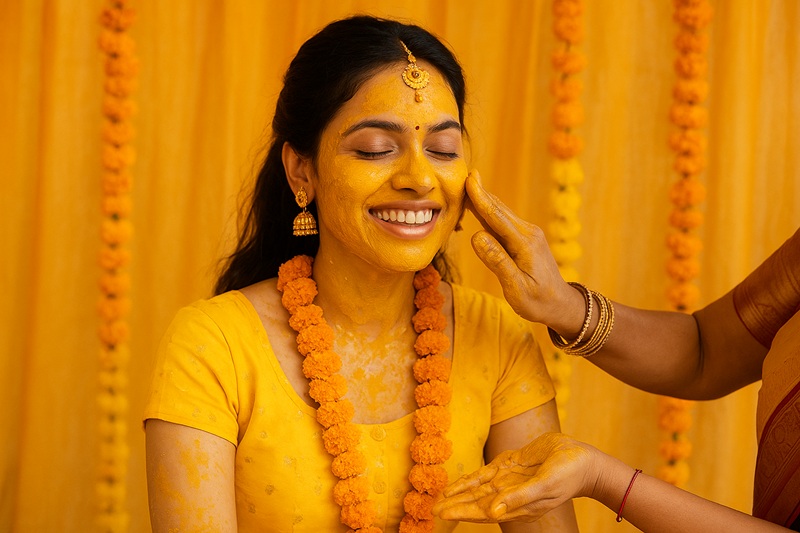
The Haldi ceremony is one of the most heartwarming and fun-filled rituals before the wedding. It’s that one function where laughter, colors, and blessings all come together. And at the center of it is the haldi paste—a blend that not only holds cultural significance but also leaves your skin glowing for the big day. If you’re a bride-to-be or someone planning the function, here’s your ultimate guide on how to make haldi paste for a Haldi ceremony, the types of turmeric you should use, and even how to prepare a bridal ubtan.
Why Do We Use Haldi for Weddings?
Haldi (turmeric) isn’t just a bright yellow powder sitting in your kitchen. In Indian traditions, it symbolizes purification, good luck, and protection against negativity. On the practical side, turmeric is full of antioxidants and anti-inflammatory properties, which help cleanse and brighten the skin. That’s why the Haldi ceremony has been a part of weddings for generations.
And if you’re planning your wedding rituals, knowing the cost of marriage in Chennai or even planning your marriage budget in India can help you organize ceremonies like Haldi more smoothly.
Which Haldi Is Best for the Ceremony?
Not all turmeric is skin-friendly. The one we cook with often leaves stubborn stains and may cause irritation. For the ceremony, here are the safer options:
- Kasturi Manjal (Wild Turmeric) – The most popular choice for bridal skincare. It doesn’t stain the skin heavily and has a natural fragrance.
- Shesha Ayurveda Kasturi Manjal – A trusted brand many brides recommend.
- Fresh Turmeric Root – Traditionally, raw roots are ground into a paste. It feels more authentic but can be stronger on sensitive skin.
- Cosmetic-Grade Turmeric Powders – From brands like Kama Ayurveda or Blend It Raw Apothecary, which ensure purity.
Pro Tip: Always do a patch test a week before your ceremony to avoid surprises!
Step-by-Step Recipe for Haldi Paste
Here’s a simple and traditional recipe you can prepare at home.
Ingredients:
- 2–3 tablespoons turmeric (Kasturi Manjal or fresh root paste)
- 1 tablespoon sandalwood powder (adds fragrance and soothes the skin)
- 2 tablespoons rose water or raw milk (to mix and hydrate)
- 1 teaspoon coconut oil or mustard oil (prevents stains and nourishes the skin)
Method:
- Take turmeric in a bowl. If using fresh root, grind it on a stone with a little water or milk.
- Add sandalwood powder and mix well.
- Slowly add rose water or milk until it forms a smooth, creamy paste.
- Stir in a little oil for a silky texture and to make it easy to apply.
That’s it—your Haldi paste is ready to be used during the ceremony!
How to Make a Bridal Haldi Ubtan
Many brides prefer preparing an ubtan—a herbal face and body pack that not only enhances the ritual but also pampers the skin. Here’s a classic recipe:
Ingredients for Ubtan:
- 2 tablespoons gram flour (besan)
- 1 tablespoon turmeric (Kasturi Manjal preferred)
- 1 tablespoon sandalwood powder
- 2–3 teaspoons rose water or yogurt
- 1 teaspoon honey or aloe vera gel (for extra moisture)
Method:
- Mix the dry ingredients in a clean bowl.
- Add rose water or yogurt to make a paste.
- Blend in honey or aloe vera for smoothness.
- Apply evenly on the skin, leave for 10–15 minutes, then rinse with lukewarm water.
This ubtan not only gives a bridal glow but also gently exfoliates the skin. Brides often apply it a few times in the weeks leading up to the wedding for best results.
Practical Tips for Brides
- Stains are real – Wear an outfit you don’t mind getting turmeric on. It’s going to be messy!
- Keep it simple – Too many ingredients can irritate the skin. Stick to a trusted recipe.
- Prepare fresh – Make the paste on the same day for maximum effect.
- Enjoy the moment – The Haldi ceremony is less about the paste and more about the joy, love, and laughter you’ll share with your family and friends.
And when planning your Haldi event, don’t forget the right wedding venues in Chennai or even unique beach wedding venues if you’re dreaming of a more outdoor, colorful vibe.
Why Are Haldi and Sangeet Suddenly So Popular?
If you’re from Kerala or South India, you might have noticed that Haldi and Sangeet weren’t always part of weddings—but now they’re everywhere. Why?
- Social Media Influence – Weddings are more Instagram-driven than ever. Colorful haldi smears and dance reels from sangeet are “aesthetic” and get shared widely.
- Bollywood Effect – Hindi movies and celebrity weddings glamorized these functions, making them aspirational.
- More Fun, Less Formality – Traditional South Indian weddings can feel serious and ritual-heavy. Haldi and sangeet give younger crowds a chance to dance, sing, and bond.
- Event Management & Photography – Planners and photographers encourage families to host more functions—more events, more memories, more photos.
- Post-2020 Intimacy – With guest lists shrinking during the pandemic, families wanted smaller, fun-filled events. Haldi and sangeet became the perfect way to include everyone in celebrations.
- Cultural Borrowing & Fusion – Kerala weddings, once very formal, are blending with North Indian elements to make them more vibrant and engaging.
In short: people want more joy, more color, and more reasons to celebrate. And honestly? That’s what weddings should be about.
Event planners today combine music, dance, and stunning wedding decoration themes to make these pre-wedding functions Instagram-worthy.
Final Thoughts
The Haldi ceremony is a reminder that weddings aren’t just about grandeur—they’re about meaningful traditions that connect us to our roots. Whether you choose to grind fresh turmeric or use ready-to-mix powders, the key is to make something safe, natural, and easy on your skin.
As a bride, don’t stress too much about getting the “perfect” paste. The real glow will come from the happiness and love you feel on your big day.
Check out our – Most common wedding gift ideas
Kasturi Manjal (wild turmeric) is considered the best because it is gentle on the skin and doesn’t leave heavy stains. Fresh turmeric root or cosmetic-grade turmeric powders are also good options.
It’s best to prepare it fresh on the same day to retain its fragrance, texture, and effectiveness. If you’re using fresh root, grind it the night before and refrigerate it, then mix with other ingredients before applying.
Haldi paste is usually a simple mix of turmeric, sandalwood, and liquids like milk or rose water, used during the ceremony. Bridal ubtan, on the other hand, is a skincare pack that combines turmeric with gram flour, honey, or yogurt for glowing skin.
Social media trends, Bollywood influence, event planners, and the desire for more fun-filled, intimate celebrations have made these functions popular, even in places where they weren’t traditional.
Yes, turmeric can leave yellow stains, especially if using cooking turmeric. To avoid this, use Kasturi Manjal and add a little oil to the paste. Also, wear outfits you don’t mind staining.